
Web Desk — October 30, 2025
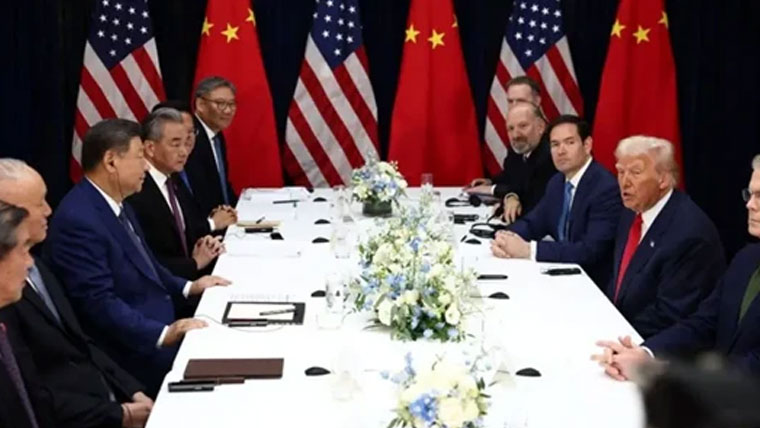
Busan: Presidents Donald Trump and Xi Jinping sealed a one-year trade pact on Thursday during a bilateral meeting on the sidelines of the Asia-Pacific Economic Cooperation (APEC) summit here, with the US announcing a 10% cut in tariffs on Chinese goods—from 57% to 47%—in exchange for Beijing’s tougher stance on fentanyl precursors and resumed rare earth exports.
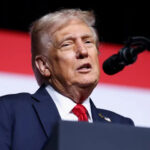
Speaking to reporters aboard Air Force One post-meeting, Trump described the 100-minute talks as “amazing” and “truly great,” rating them a “12 out of 10.” He confirmed the deal would be routinely extended and highlighted resolutions on key flashpoints: China cracking down on chemical inflows fueling US fentanyl deaths, unrestricted rare earth trade vital for tech and EVs, and Beijing ramping up soybean purchases to boost American farmers.
“Xi is a great leader,” Trump said, noting the agreement resets ties to pre-escalation levels before his “Liberation Day” tariff hikes. He invited Xi to the US, pledging an April visit to China. The fentanyl curbs come as a direct response to US demands, with Trump crediting the deal for saving American lives.
On Ukraine, Trump revealed alignment with Xi for joint efforts, quipping, “Sometimes you let them fight, but we’ll work together on it.” Taiwan, a perennial sore spot, was not raised, per Trump. Xi, in a pre-meeting statement, stressed US-China partnership as “friends and partners” to tackle global challenges, echoing his call for two superpowers to share responsibilities.
The US delegation included Secretary of State Marco Rubio, Trade Rep Jamieson Greer, Treasury Sec. Scott Bessent, Commerce Sec. Howard Lutnick, Chief of Staff Susie Wiles, and Ambassador to China David Perdue. China’s side featured Chief of Staff Cai Qi, Foreign Minister Wang Yi, Vice Foreign Minister Ma Zhaoxu, Vice Premier He Lifeng, Commerce Minister Wang Wentao, and NDRC Chairman Zheng Shanjie.
The pact, hailed as a truce in the years-long trade war, arrives amid Trump’s Asia tour, including ASEAN in Malaysia and stops in Japan and South Korea. Analysts see it as a pragmatic pause, though skeptics question its longevity given past breakdowns. China confirmed the tariff relief and mutual visits in its readout, signaling cautious optimism.