
More than two centuries ago, the Nawabs of Awadh (Oudh) lent large sums of money to the East India Company with the agreement that the interest (profit) from these loans would be paid as pensions (known as “Wasiqa”) to their descendants and associates.
Even today—long after India’s independence in 1947, and nearly 170 years after the fall of the Nawabs—hundreds of people in Lucknow, India continue to receive these symbolic pensions.
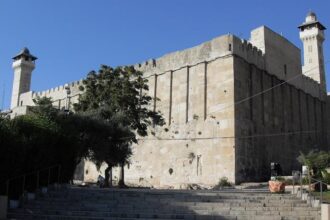
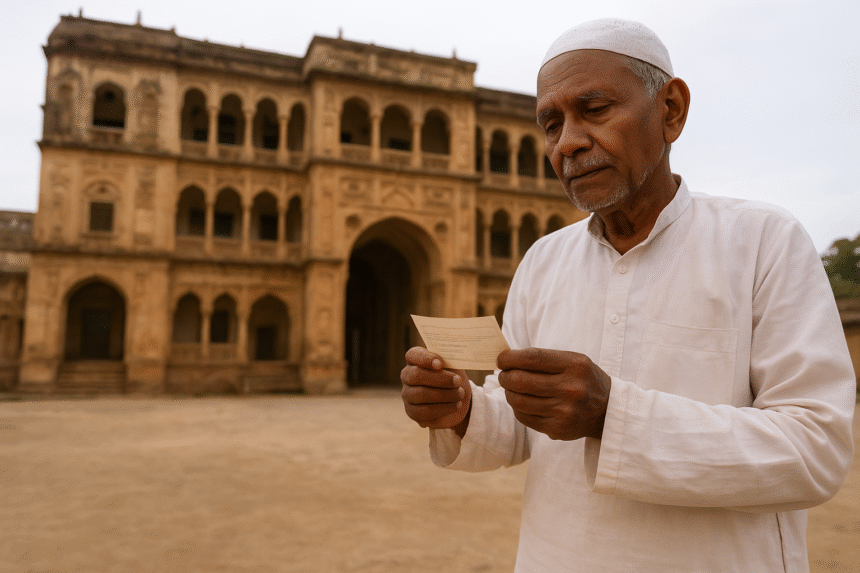
One such recipient is 90-year-old Fayyaz Ali Khan, who travels to a historic building built by Nawab Muhammad Ali Shah to collect his annual pension of just ₹9.70 (about 10 cents). He says this tradition has continued since the time of his great-grandfathers.
The “Wasiqa” system began around 1817, when Begum Bahu, wife of Nawab Shuja-ud-Daula, deposited nearly 4 crore rupees with the East India Company under the condition that her family and associates would receive lifelong pensions. Later, other Nawabs—such as Ghazi-ud-Din Haider and Nasir-ud-Din Haider—made similar perpetual loans.
After independence, the management of these funds was transferred to Indian institutions. Around ₹26 lakh still remains deposited in Lucknow’s Syndicate Bank, and the interest from this amount continues to fund the Wasiqas.
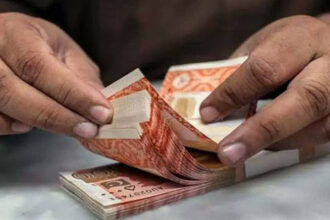
Today, about 1,200 people receive these pensions, ranging from a few rupees to a few hundred annually. Payments are made through two offices—Husainabad Trust (cash) and Uttar Pradesh Will Office (bank transfer). Together, they distribute roughly ₹560,000 in total each year.
The amount each descendant receives has shrunk drastically over generations. Some now get as little as ₹5 to ₹20, while others use the money merely as a symbolic heritage.
Historians note that the division of shares among heirs and the switch from silver coins to rupees caused the decline in value.
Some descendants, like Shahid Ali Khan, are appealing to increase the pension, arguing that it should at least match the current value of silver as in the Nawabs’ time.
Despite the small amount, many heirs still take pride in collecting their Wasiqa. For them, it’s not about money—but a matter of history, honor, and identity, a living link to the once-magnificent royal legacy of Awadh.
We welcome your contributions! Submit your blogs, opinion pieces, press releases, news story pitches, and news features to spotpakistan25@gmail.com