

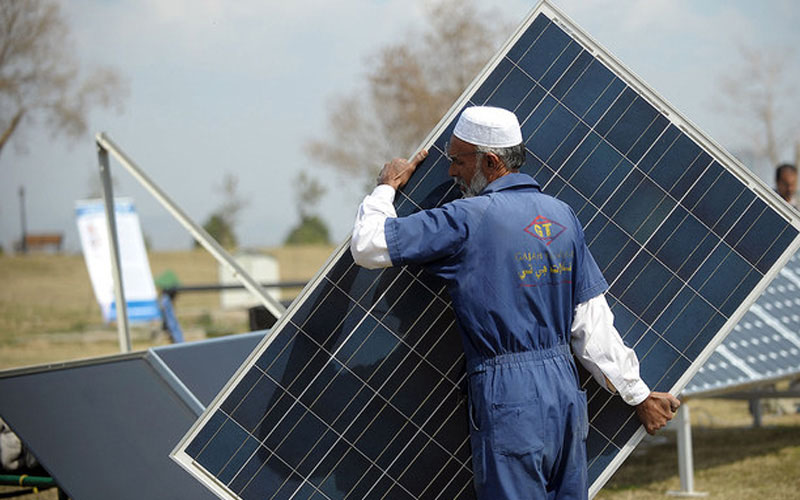
Paris, October 7, 2025 – The International Energy Agency (IEA) forecasts that global renewable power capacity will more than double by 2030, adding 4,600 gigawatts (GW)—equivalent to the combined electricity systems of China, the EU, and Japan—according to its latest “Renewables 2025” report. Solar PV will dominate, accounting for nearly 80% of this expansion, driven by plummeting costs and ambitious targets in emerging markets like India and Saudi Arabia. Wind, hydropower, bioenergy, and geothermal will contribute the rest, though offshore wind growth is tempered by supply chain woes and policy shifts in the US and China.
The IEA revised its 2025-2030 forecast down 5% from last year due to US tax incentive phase-outs and China’s auction transitions, but growth in over 80% of countries remains robust, fueled by auctions and corporate PPAs (30% of additions). Renewables are projected to meet over 90% of electricity demand growth, pushing their global share from 32% in 2024 to 43% by 2030.
Echoing this momentum, energy think tank Ember’s “Global Electricity Review Mid-Year Insights 2025” reveals renewables overtook coal generation for the first time ever in H1 2025, hitting 34.3% share (5,072 TWh) versus coal’s 33.1% (4,896 TWh). Solar surged 31% (306 TWh), meeting 83% of a 2.6% demand rise, with wind adding 97 TWh, curbing fossil use by 0.3% overall. China and India led, with clean energy outpacing demand and slashing emissions.
Ember’s Global Programme Director Raul Miranda hailed this as an “irreversible revolution,” with emerging economies in Asia, Africa, and Latin America at the forefront. “Renewables aren’t just meeting demand—they’re driving economic growth and energy security,” he said, validating IEA’s 2020 prediction of 33% renewables share by 2025, now at 34.3%. Yet, challenges like grid upgrades and storage persist to sustain this shift away from fossils.