
🧠 Overview
- 🧩 What is Frailty and Why It Matters
- ☁️ The Study’s Findings
- 💨 How Air Pollution Damages the Aging Body
- 1. Chronic Inflammation
- 2. Oxidative Stress
- 3. Cardiovascular and Respiratory Strain
- 4. Cognitive Decline
- 🏙️ Global Patterns: Urban vs. Rural Differences
- 🩺 Health Experts Speak
- 🧘 How to Protect Aging Populations
- 🌏 The Broader Picture
- ✨ Conclusion
A global review of scientific studies has revealed a concerning link between air pollution and frailty among middle-aged and older adults. Frailty, a condition marked by weakness, fatigue, and decreased resilience to stress, significantly increases the risk of disability, hospitalization, and premature death.
This revelation underscores the growing health threat of poor air quality — not only to the lungs and heart but also to the aging process itself.
🧩 What is Frailty and Why It Matters
Frailty isn’t just “getting old.” It’s a medical syndrome defined by a combination of symptoms such as:
- Reduced physical strength
- Slow walking speed
- Unintentional weight loss
- Fatigue and low energy
- Poor balance and vulnerability to stressors
Doctors and researchers use frailty as a key predictor of health outcomes in aging populations. A frail person is more likely to experience falls, need long-term care, or have complications during illness or surgery.
When environmental factors like air pollution accelerate this condition, the impact becomes far-reaching.
☁️ The Study’s Findings
A comprehensive meta-analysis published in recent global journals examined data from multiple countries over the last two decades. The findings were consistent and alarming:
“Older adults exposed to higher levels of outdoor air pollution, particularly fine particulate matter (PM2.5), nitrogen dioxide (NO₂), and ozone (O₃), were significantly more likely to develop frailty over time.”
Key findings include:
- A 20–30% increase in frailty risk among older adults exposed to high PM2.5 levels.
- Long-term exposure (more than 5 years) showed the strongest correlation.
- Urban residents faced greater risk than rural populations.
- Women and individuals with pre-existing cardiovascular or respiratory issues were especially vulnerable.
💨 How Air Pollution Damages the Aging Body
Scientists believe air pollution contributes to frailty through several biological mechanisms:
1. Chronic Inflammation
Continuous exposure to fine particulate matter triggers low-grade inflammation in the body. This persistent inflammation breaks down muscle tissues and accelerates cellular aging.
2. Oxidative Stress
Pollutants increase oxidative stress — a process that damages cells, proteins, and DNA, leading to muscle weakness and fatigue.
3. Cardiovascular and Respiratory Strain
Polluted air limits oxygen delivery, burdening both the heart and lungs. Over time, this causes decreased stamina and physical capacity.
4. Cognitive Decline
Air pollution has also been linked to neurodegeneration and cognitive impairment, both of which can worsen frailty in older adults.
🏙️ Global Patterns: Urban vs. Rural Differences
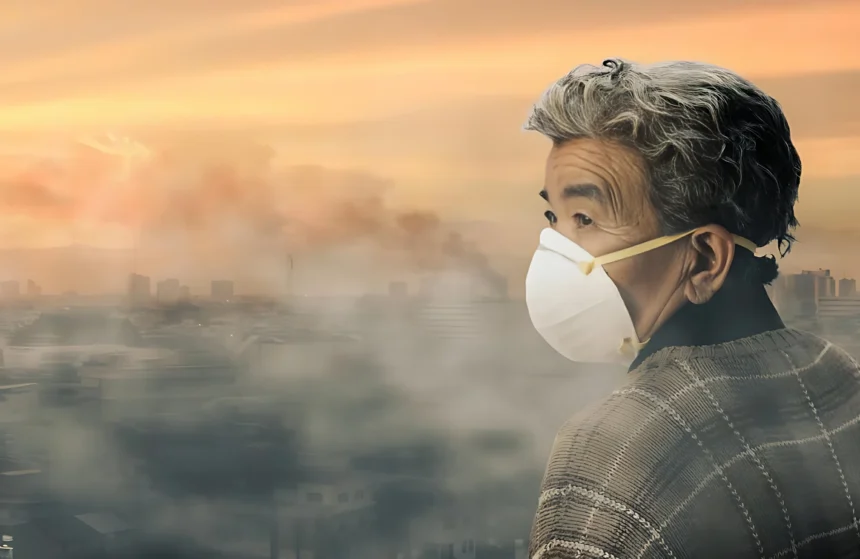
Cities like Delhi, Beijing, Lahore, and Mexico City, where PM2.5 levels often exceed safe limits, have shown higher rates of age-related frailty.
In contrast, rural populations exposed to less pollution — or primarily indoor pollutants like biomass smoke — still experience risks but at lower intensity.
“Frailty doesn’t only come from aging; it’s shaped by the environment we live in.”
🩺 Health Experts Speak
According to Dr. Maria Chen, an environmental health researcher:
“The air we breathe is silently shaping how we age. Protecting older adults from pollution is not just an environmental issue — it’s a healthcare priority.”
Similarly, Dr. Faisal Ahmad from the Global Aging Institute adds:
“We need to think of clean air as part of elderly care. It’s preventive medicine for an aging society.”
🧘 How to Protect Aging Populations
Governments, families, and individuals can take several proactive steps:
🌱 1. Policy and Regulation
- Enforce stricter air quality standards (especially for PM2.5 and NO₂).
- Invest in renewable energy and clean public transport.
- Urban tree planting and green infrastructure can reduce pollutant levels.
🏠 2. Community and Household Measures
- Use air purifiers indoors, especially in urban homes.
- Avoid outdoor exercise during high-smog days.
- Encourage community programs for clean energy and waste management.
🧓 3. Personal Health Habits
- Balanced diet rich in antioxidants (fruits, vegetables, omega-3).
- Regular moderate exercise indoors or during cleaner air periods.
- Regular medical checkups for early detection of frailty markers.
🌏 The Broader Picture
This issue isn’t just medical — it’s societal.
The aging global population (expected to double by 2050) will face immense health challenges if pollution remains unchecked. Frailty linked to environmental exposure could increase healthcare costs, reduce independence, and lower quality of life for millions.
In short, clean air is a human right and a key factor in healthy aging.
✨ Conclusion
The growing evidence linking air pollution to frailty in older adults should serve as a wake-up call for policymakers and the public alike.
It’s no longer enough to focus only on respiratory or heart diseases — we must also recognize that dirty air accelerates aging itself.
“Protecting our elders means protecting our planet’s air. Every breath we clean today builds a stronger, healthier tomorrow.”