
Eradicating polio remains achievable even with substantial funding reductions, global health officials affirmed on Tuesday, detailing strategies to address the challenges.
The Global Polio Eradication Initiative (GPEI)—a partnership involving the World Health Organization (WHO), the Gates Foundation, and others—will face a 30% budget cut in 2026 and a $1.7 billion funding gap through 2029, primarily due to reduced foreign aid from the United States and other donor nations.
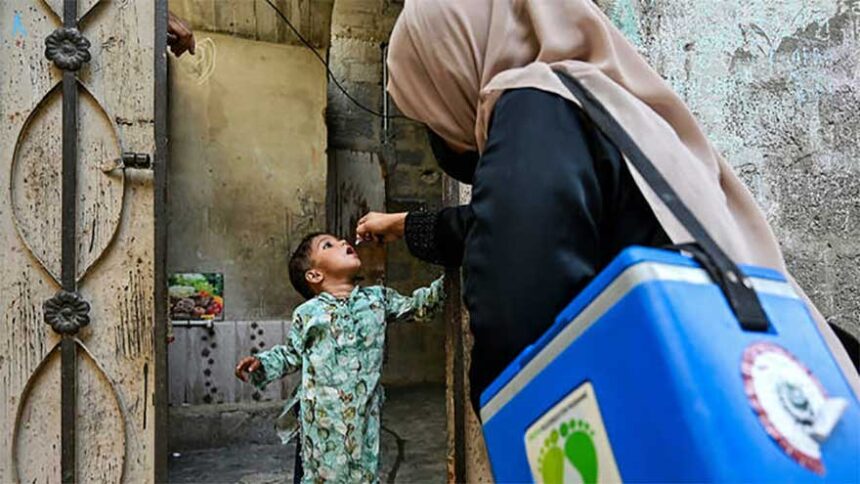
To adapt, GPEI partners plan to intensify surveillance and vaccination in high-transmission-risk areas. They will also integrate efforts with other health programs, such as measles campaigns, and employ fractional dosing—using as little as one-fifth of a standard vaccine dose—to extend supplies and lower costs, backed by studies confirming its effectiveness in protecting children.
Certain activities in lower-risk regions will be scaled back unless outbreaks occur, with an emphasis on operational efficiencies.
“The significant reductions in funding… mean that certain activities will simply not happen,” stated Jamal Ahmed, WHO Director of Polio Eradication, during a Tuesday press conference.
Eliminating the paralyzing viral disease has been a decades-long global goal. Mass vaccination since 1988 has driven major progress, though initial targets like 2000 were missed. Experts debate feasibility due to asymptomatic spread, but proponents argue halting now—when success is near—would be unwise amid issues like conflict and vaccine hesitancy.
“Eradication remains feasible and is doable,” Ahmed emphasized. “We need everybody to remain committed and ensure that no child is left behind.”
In 2025, 36 wild polio cases have been reported in Afghanistan and Pakistan—the only endemic countries—where core operations will persist. Additionally, 149 vaccine-derived polio cases occurred this year in nations like Nigeria. Both forms have declined from 2024 levels.
Vaccine-derived polio arises when the oral vaccine’s weakened live virus mutates and spreads in under-vaccinated communities, though it protects immunized children.